

August 20, 2026 (Toronto, ON) - A new Liaison Strategies Toronto survey shows Mayor Olivia Chow leading Councillor Brad Bradford by 11 points among decided and leaning voters, while Torontonians prefer a balanced approach to the next mayor's relationship with Premier Doug Ford and the Ontario government.
Among decided and leaning voters, Chow receives 49%, Bradford receives 38%, Chris Alexander receives 11%, and someone else receives 3%. In Liaison's August 7 Toronto survey, Chow stood at 47%, Bradford at 40%, Alexander at 10%, and someone else at 3%.
Among all voters, Chow is at 39%, Bradford is at 30%, Alexander is at 9%, someone else is at 2%, and 19% are undecided.
Liaison surveyed a random sample of 1,000 Toronto residents from August 14 to August 16, 2026, using Interactive Voice Recording (IVR) technology. Participants were reached through random digit dialling (RDD) across both landline and cellular phone networks. The resulting data was weighted to match targets based on the 2021 Census. For the total sample, the margin of error is +/- 3.1 percentage points, 19 times out of 20. The margin is higher for sub-samples. Totals may not add up to 100% due to rounding.
Liaison Strategies is one of the most accurate polling firms in Canada. It ranked #1 in accuracy in the 2025 Ontario election and #2 nationally in the 2025 federal election. Liaison is a member of the Canadian Research Insights Council.

David Valentin, Principal at Liaison Strategies, said:
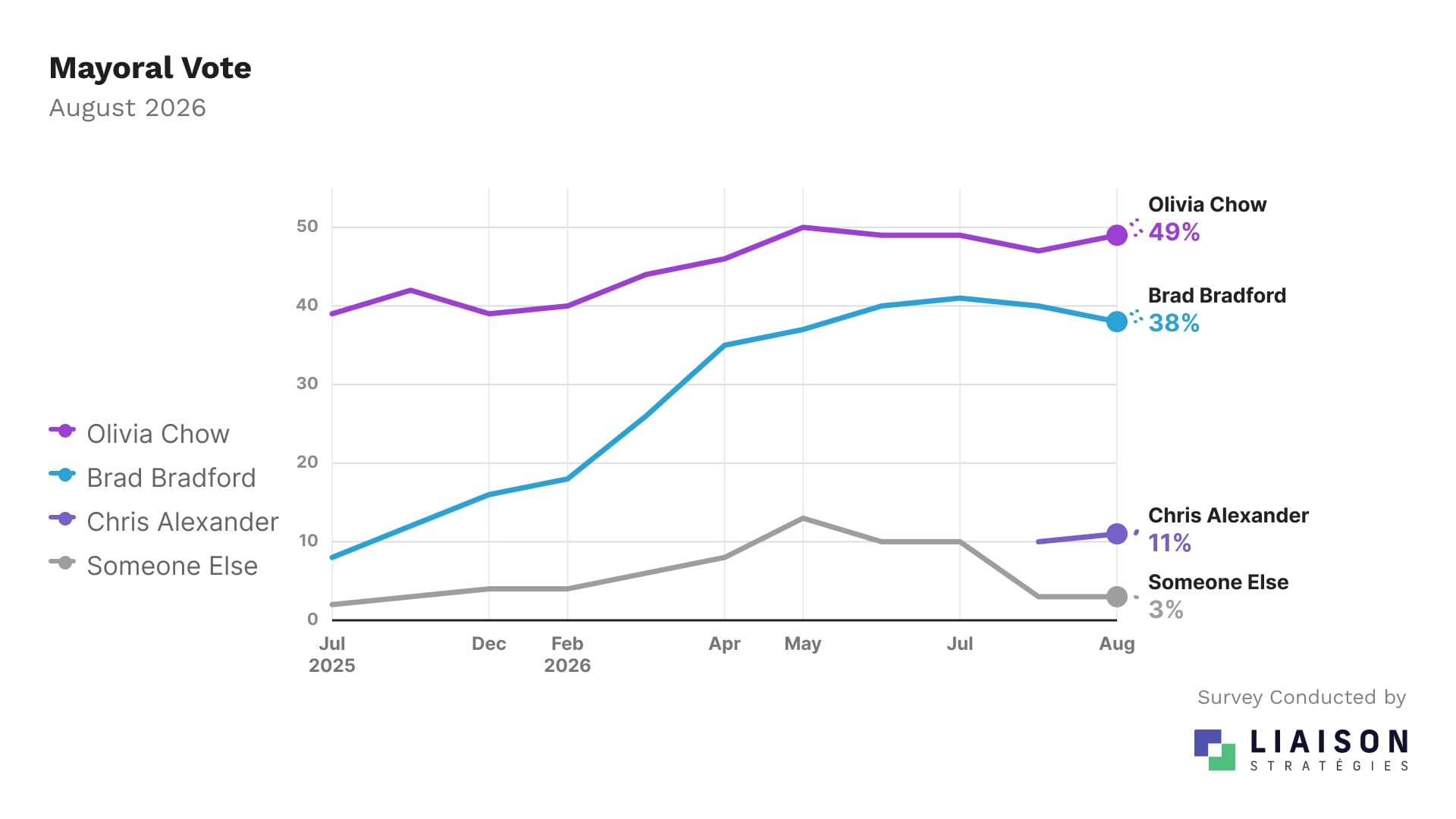
"The ballot has moved back toward a clearer Chow advantage. Among decided and leaning voters, Chow is at 49%, Bradford is at 38%, Alexander is at 11%, and someone else is at 3%. Compared with August 7, Chow is up two points, Bradford is down two, and Alexander is up one."
"The all-voter number tells the same basic story with the undecided vote included. Chow is at 39%, Bradford is at 30%, Alexander is at 9%, someone else is at 2%, and 19% are undecided. Chow is ahead, but there is still a large enough undecided pool for the campaign to matter."
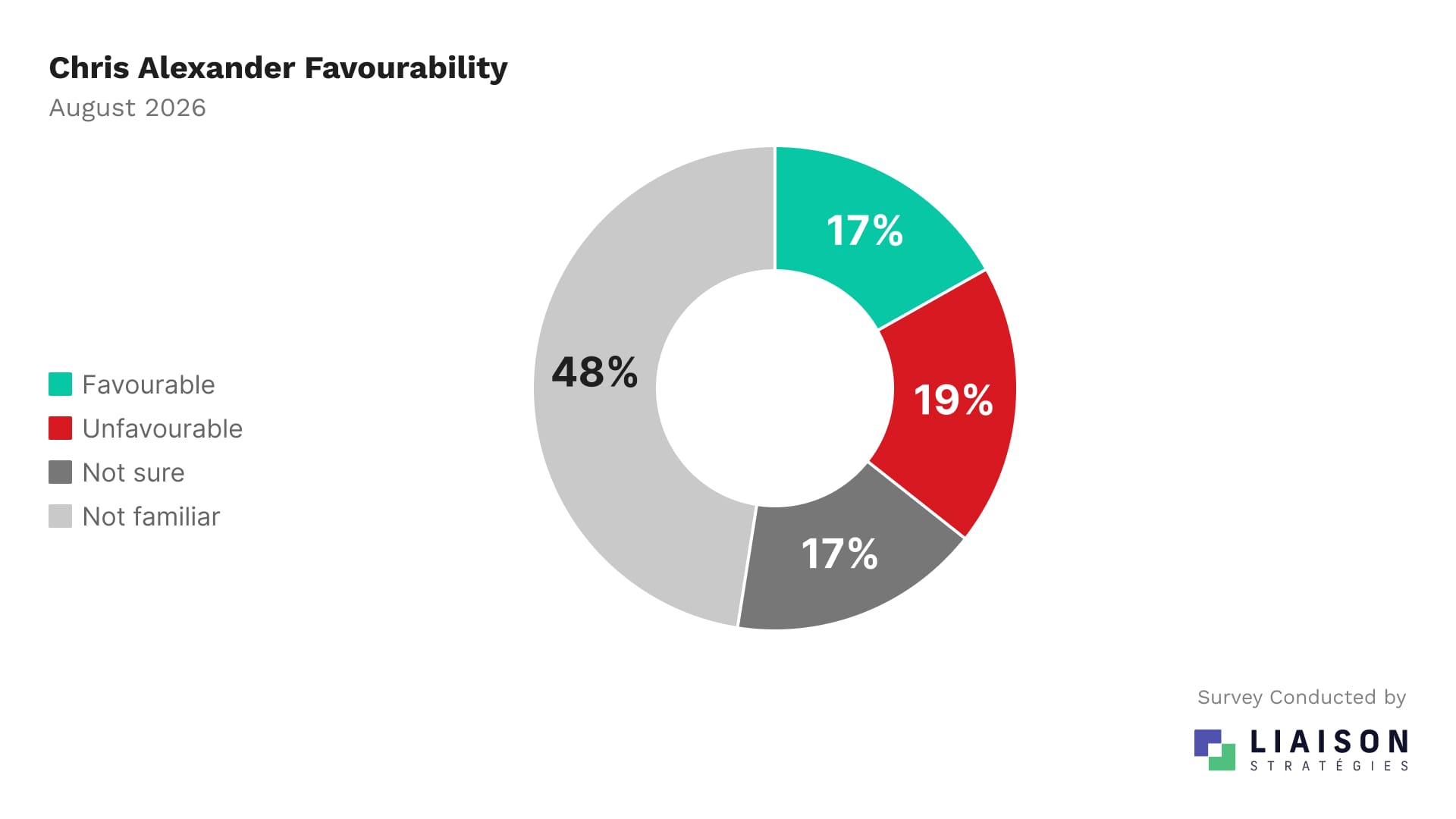
"Alexander is becoming better known, but the movement is not one-way in his favour. His not-familiar number has dropped from 61% to 48%, but his unfavourable number has climbed from 11% to 19%, while his favourable number has moved from 14% to 17%. Voters are learning who he is, and the first reaction is mixed."
"Bradford's challenge is that his vote is real, but narrower. Among decided and leaning voters, he leads men 47% to 39% and leads in Etobicoke 56% to 34%. Chow leads women 58% to 29%, Downtown 59% to 27%, North York 51% to 35%, and Scarborough 46% to 37%."
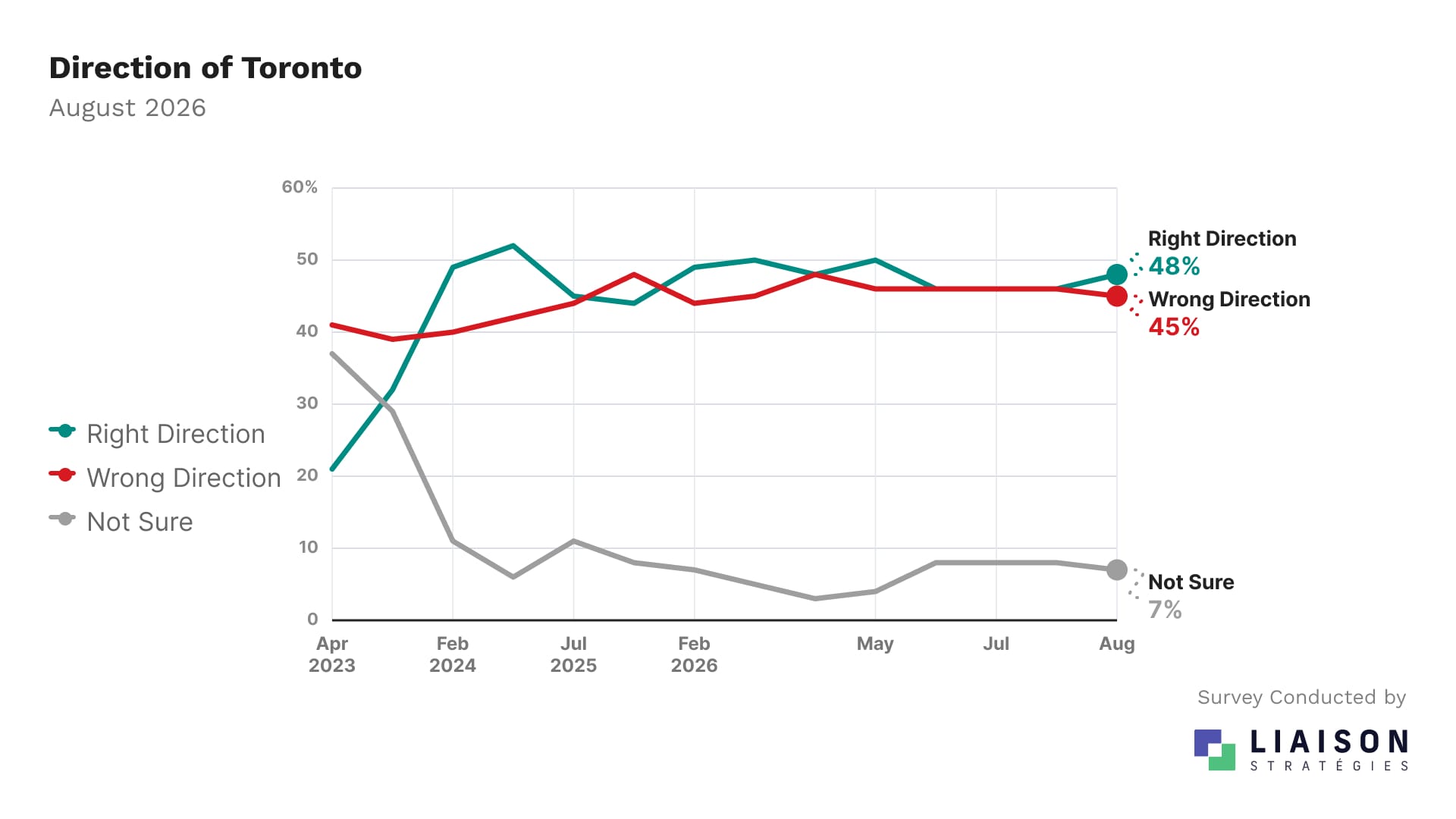
"The direction-of-city number is a quiet improvement for City Hall. Two weeks ago right direction and wrong direction were tied at 46% each. It is better ground for an incumbent than a tied or negative mood."
"Bike lanes are a major voting issue in these numbers. Sixty-five per cent say a candidate's position on bike lanes will be important to their vote. But the policy result is not a mandate to rip out the network: 35% want more bike lanes, 34% want roughly the current number, and 26% want some removed."
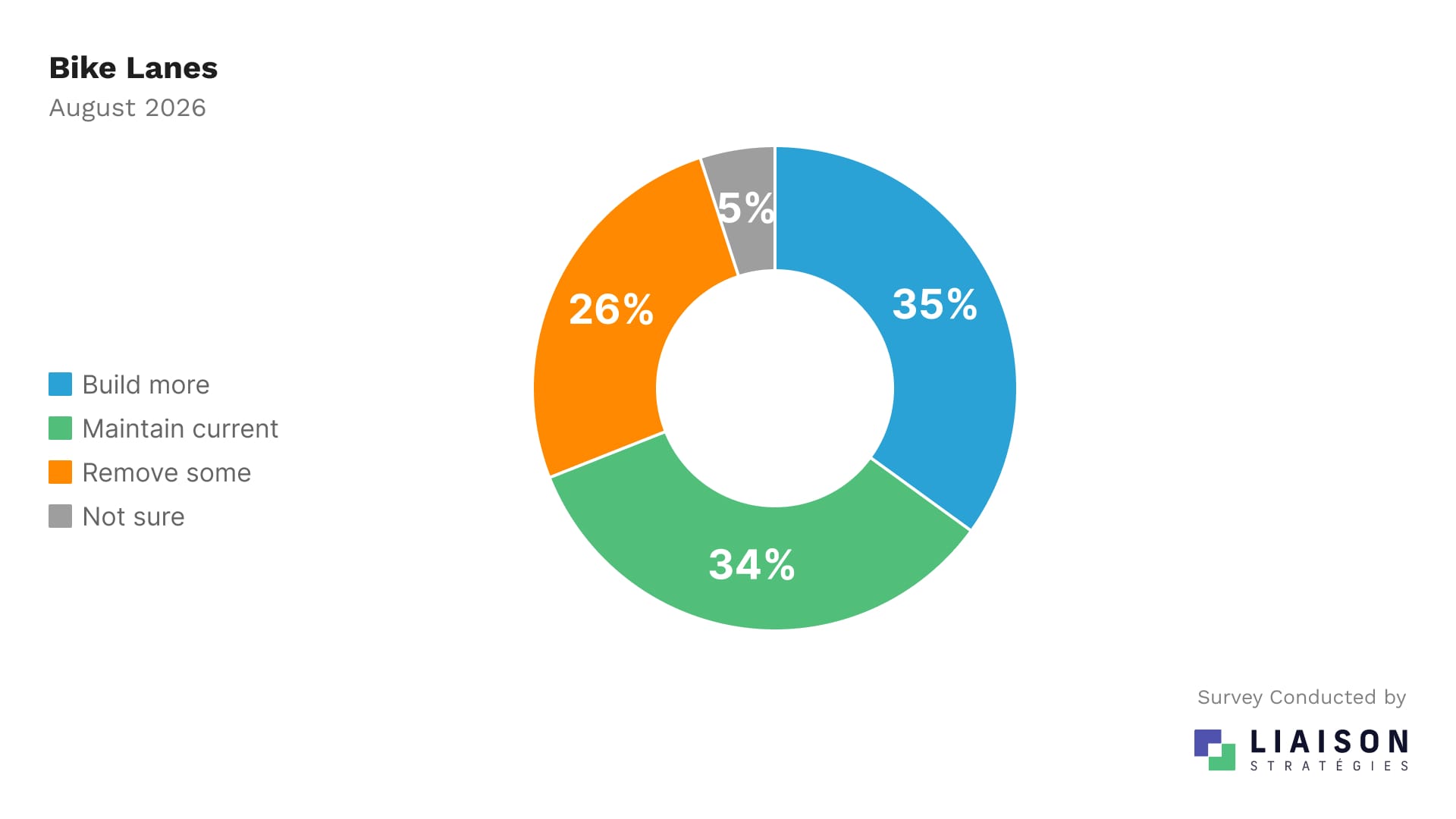
"The geography of bike lanes is stark. Downtown voters are in a different conversation than Etobicoke voters: Downtown is 49% build more and 13% remove some, while Etobicoke is 20% build more and 40% remove some. That is a real citywide fault line."
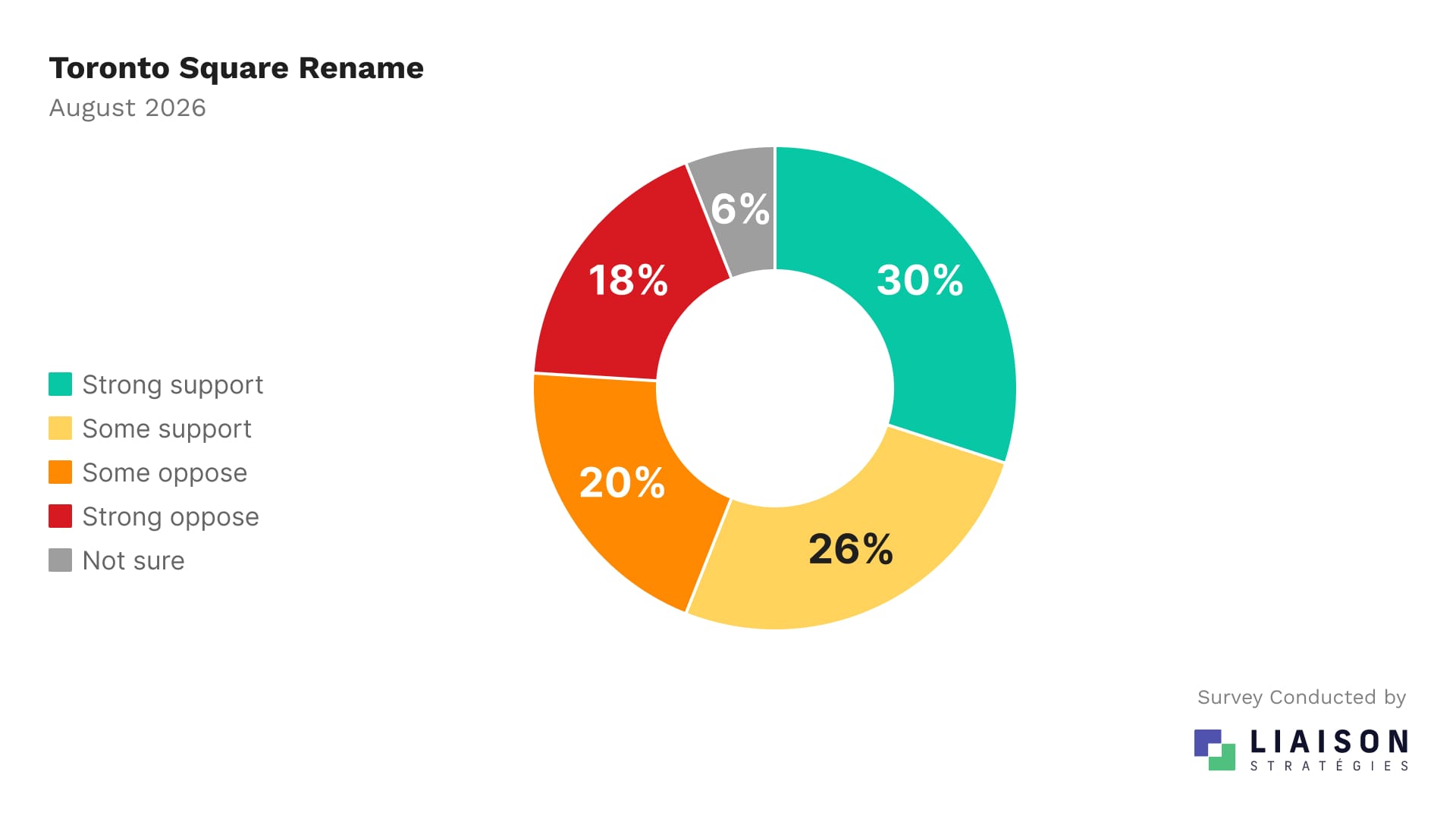
"On Sankofa Square, the proposal to rename it Toronto Square has support, but the intensity is softer. Fifty-six per cent support the rename, but only 40% say the future name will be important to their vote, and 43% say a pro-rename candidate would make no difference to their vote."
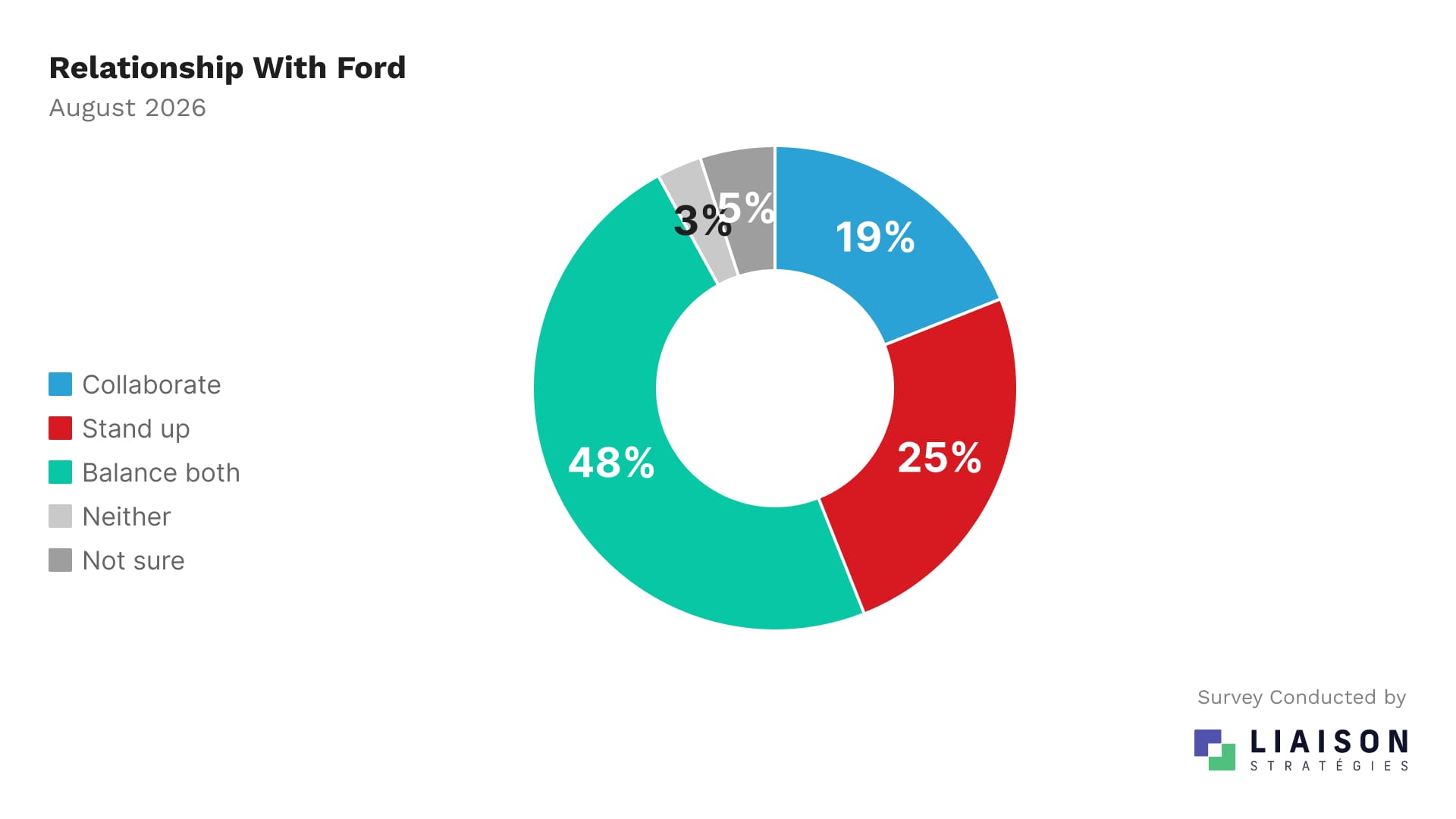
"The Ford relationship numbers are maybe the most revealing. Voters do not want a mayor who only collaborates or only fights. Forty-eight per cent say the next mayor should balance both, compared with 25% who want the mayor to stand up forcefully and 19% who want collaboration."
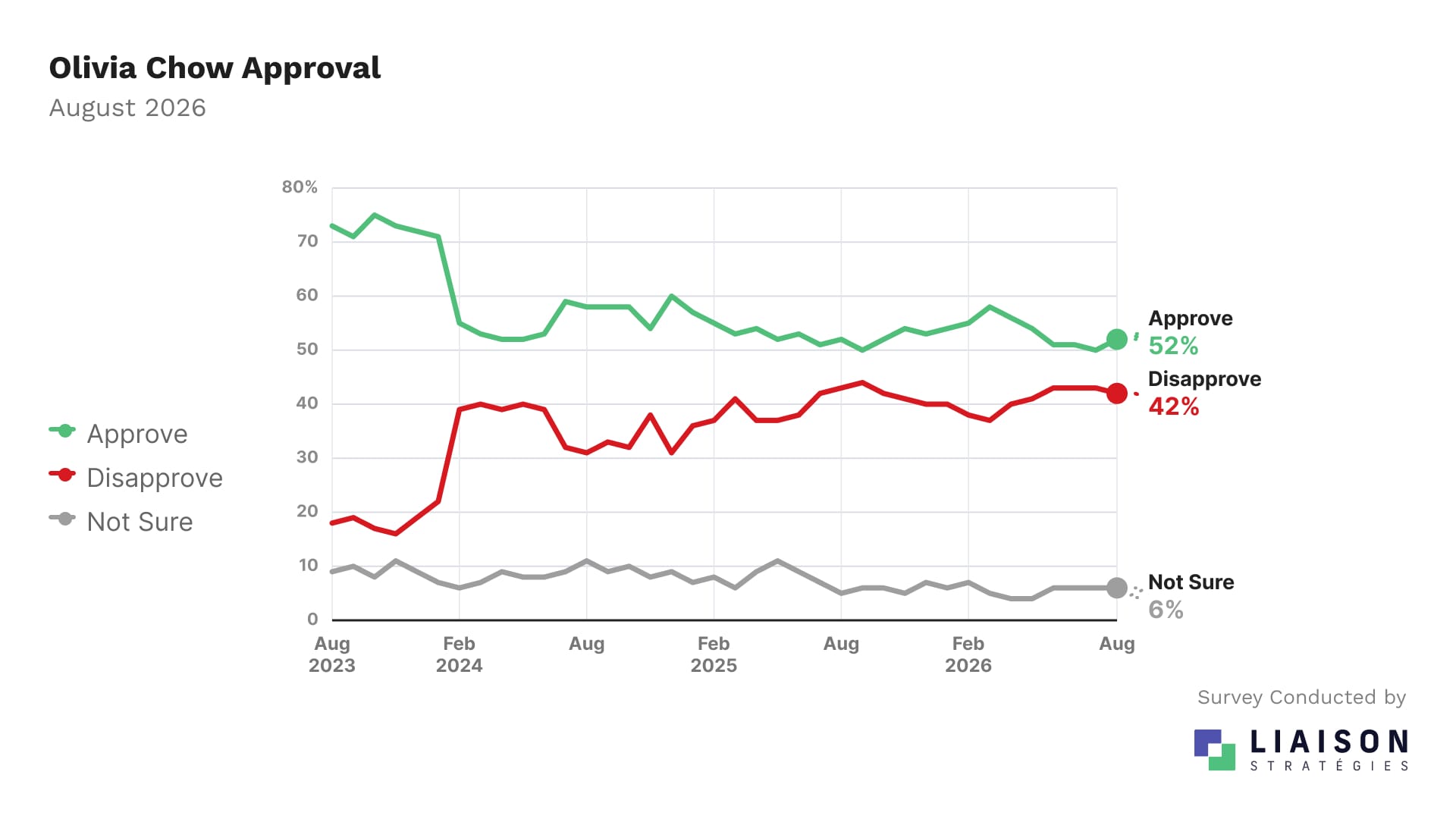
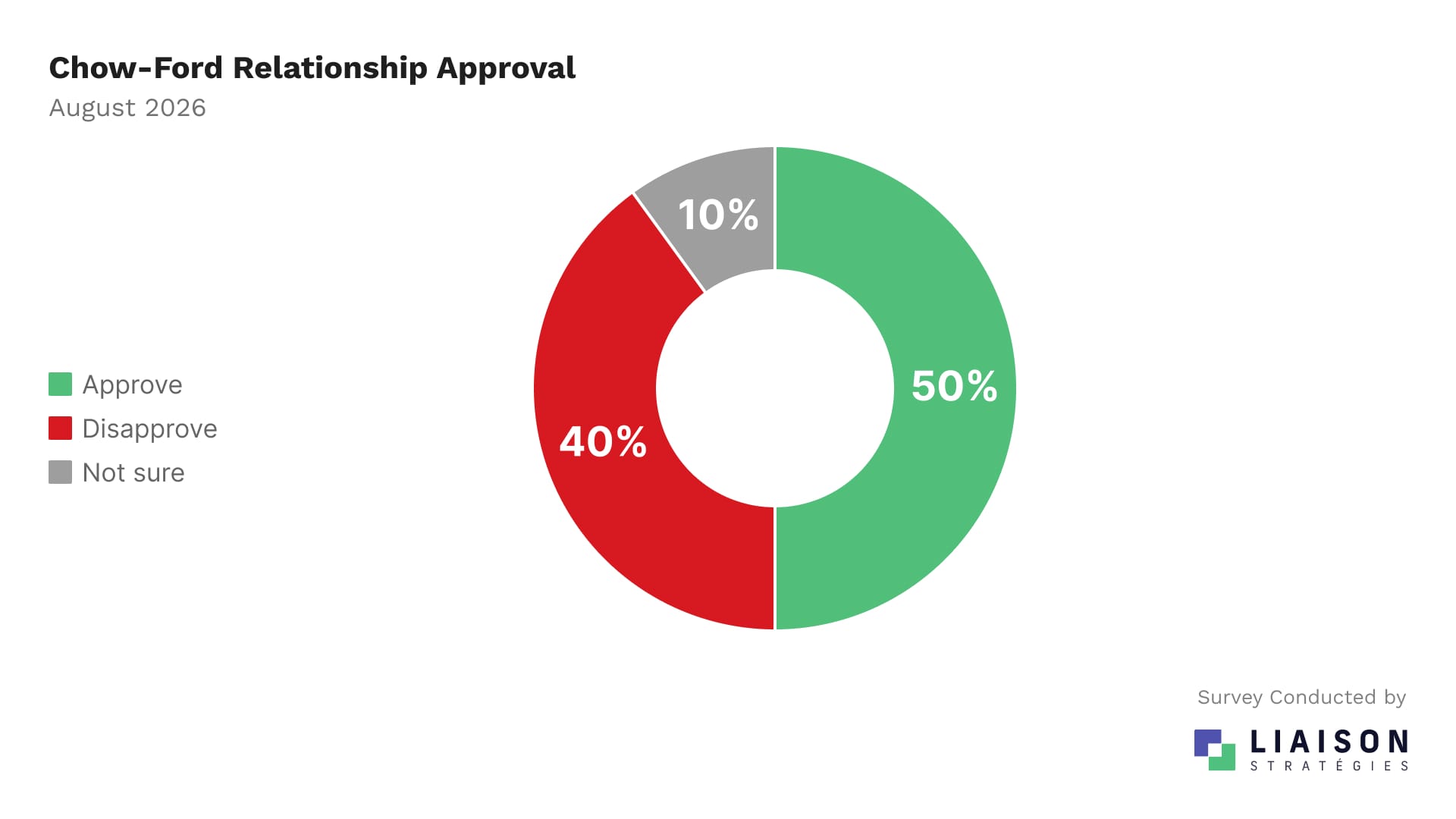
"Chow gets a decent grade on this specific relationship: 50% approve of how she has handled Toronto's relationship with Ford and the Ontario government, while 40% disapprove. That is not universal approval, but it gives her room."
-30-
Detailed Poll Report:
Detailed Tables:
About Liaison Strategies
Liaison Strategies is a national public opinion research firm. With 13 years of experience in Canadian polling, David Valentin, principal, has fielded hundreds of projects at the municipal, provincial and federal levels and appeared across Canadian media to discuss insights. Liaison is a member of the Canadian Research Insights Council (CRIC), Canada's voice of the research, analytics, and insights profession both domestically and globally.
About Liaison Strategies
Liaison is a member of the Canadian Research Insights Council (CRIC), Canada’s voice of the research, analytics, and insights profession both domestically and globally.
