

(Toronto, ON) – A new national Liaison Strategies survey finds Canadians are approaching 2026 with cautious ambition, but the cost of living is shaping what people think they can realistically change in their personal lives.
Conducted from December 26, 2025 to January 3, 2026 using Interactive Voice Response (IVR), the rolling survey polled 1,000 Canadians, with the sample split evenly between two weeks (500 per week). The margin of error is ±3.09 percentage points, 19 times out of 20.
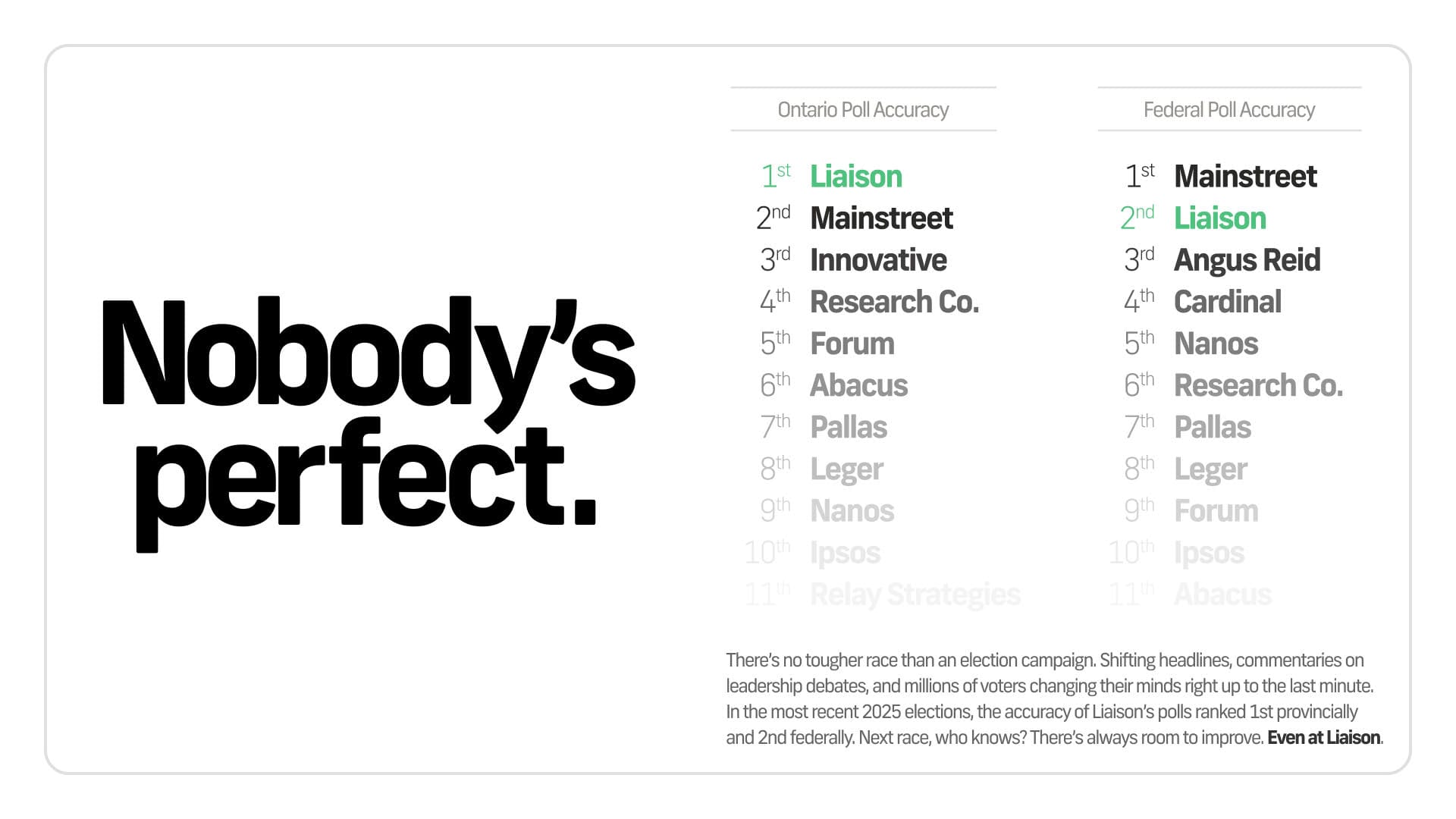
Liaison Strategies is one of the most accurate polling firms in Canada. It ranked #1 in accuracy in the 2025 Ontario election and #2 nationally in the 2025 federal election. Liaison is a member of the Canadian Research Insights Council (CRIC).
David Valentin, Principal at Liaison Strategies, said:
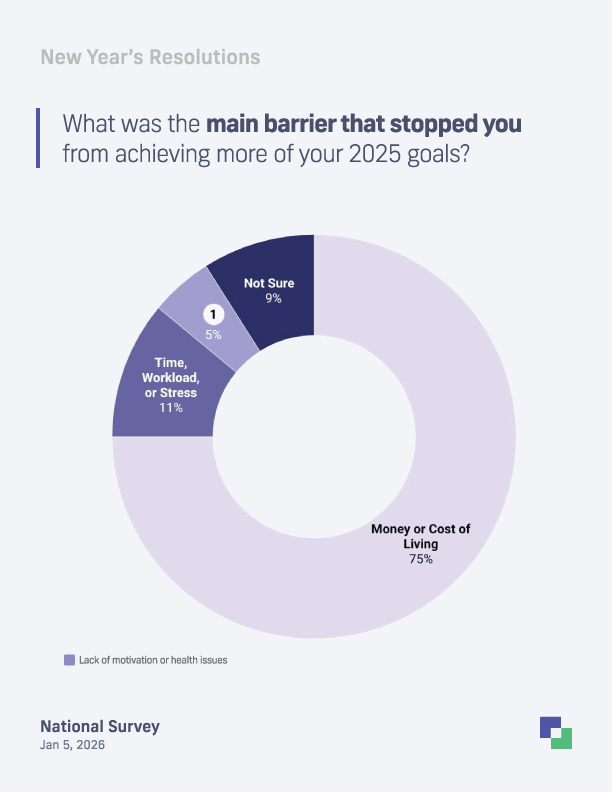
"Half of Canadians (49%) say they set personal goals or New Year’s resolutions for 2025. But when asked what got in the way of achieving more, three-quarters (75%) point to money and the cost of living, far outpacing time/workload (11%) or motivation/health issues (5%)."
“Canadians are not saying they don’t want to improve. They are saying they can’t budget their way into a better year. When the cost of living becomes the main barrier to personal goals, a self-help story becomes an economic story.
Key findings
- Most Canadians say they only partly met their 2025 goals: 62% say they achieved some, 29% say they achieved few or none, and just 1% say they achieved most or all.
- Canadians are cautious about making meaningful changes in 2026: 14% say they are optimistic, 68% cautious, and 14% pessimistic.
- Small weekly habits beat big annual resolutions: 59% say small weekly habits work better, compared to 32% who prefer big annual goals.
- If Canadians pick one habit for January, it’s most often physical: 39% choose a physical habit (movement or more sleep), 30% choose a mental habit (less screen time or volunteering), and 27% choose a financial habit (tracking spending or cooking at home).
- Looking ahead, the cost of living remains the biggest obstacle to 2026 goals: 68% say financial pressure will be the hardest barrier to overcome.
- What would help most: 71% say lower cost of living and economic relief would help them most in achieving personal goals this year.
“People are trying to be practical. They’re shifting toward smaller, achievable habits,” Valentin added. “But the same theme keeps coming up. Canadians believe the hardest part of self-improvement is the price tag.”
À propos de Stratégies Liaison
provincial et fédéral et est apparu dans les médias canadiens pour discuter de ses observations.
Liaison est membre du Conseil de recherche et d’intelligence marketing canadien, le porte-parole canadien des professionnels de la recherche, de l’analyse et de l’information, tant au Canada qu’à l’étranger.
